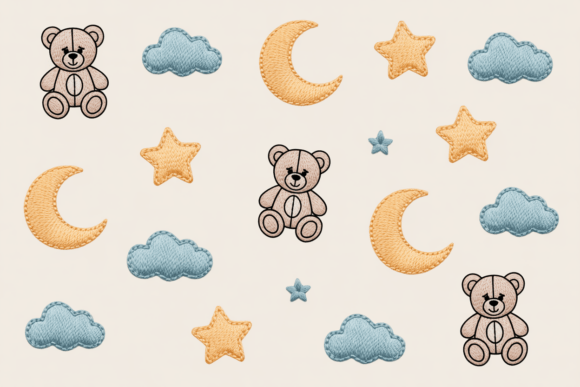
Reviewing the Baby Embroidery Pattern for Real Projects
As a designer who has spent years navigating the gap between digital files and stitched reality, I approach every new Baby Embroidery Pattern with a specific set of questions. Does it translate from screen to fabric without losing its soul? Will it hold up under the scrutiny of a customer holding a finished product? This particular design, described as featuring delicate wildflower stitches on a soft linen texture, immediately signals a specific aesthetic direction. It promises an elegant handcrafted look, but in the world of machine embroidery, "delicate" can sometimes mean "fragile" if not executed correctly.
When I first opened this digital pattern, the visual personality was clear. The layout avoids the heavy, blocky fills that often plague lower-quality graphics. Instead, it leans into the organic flow of wildflowers, suggesting a mix of running stitch and fine fill stitch techniques. For anyone running a craft business or selling handmade products on Etsy, this kind of visual nuance is what separates a generic item from a boutique piece. However, before committing this design to a client project or a small shop product line, I needed to stress-test how it would perform in actual use.
The First Stitch: Mood and Application
The mood created by the Baby Embroidery Pattern is undeniably gentle and nostalgic. It evokes the feeling of a heirloom quilt or a carefully curated nursery corner. In terms of application, this design feels tailor-made for custom apparel where subtlety is key. Imagine placing this motif on the chest of a high-quality organic cotton sweatshirt or the corner of a linen tote bag. The "soft linen texture" mentioned in the description suggests that the design mimics the weave of the fabric itself, which is a brilliant strategy for blending the embroidery into the garment rather than having it sit stiffly on top.
I recently considered using this for a personalized gift order—a set of baby onesies for a boutique client. The challenge with baby items is that they require frequent washing and must feel soft against sensitive skin. The delicate nature of these wildflowers means the thread usage is likely lighter than a standard logo patch. If the stitch density is too low, the design might pucker; if it's too high, it could become scratchy. My instinct is that this machine embroidery design works best when paired with a proper stabilizer that supports the fabric without adding bulk.
Real-World Performance on Apparel and Home Goods
Let's talk about where this design truly shines. For custom apparel, particularly lightweight fabrics like t-shirts or dresses, the Baby Embroidery Pattern offers a refined alternative to heavy applique designs. The floral elements are intricate enough to add value but open enough to let the fabric breathe. I envision this looking stunning on a tea towel or a pillow cover, where the "handcrafted look" aligns perfectly with home decor trends.
For the Etsy seller or small business owner, this pattern is a versatile asset. It can be used as a standalone focal point on a hat or cap, provided the hoop size allows for the full spread of the flowers. Alternatively, it works beautifully as a repeating border on a blanket or a decorative accent on an apron. The key here is understanding the scale. A wildflower design loses its charm if shrunk too small, turning into a muddy blob of thread. Conversely, if expanded too large without adjusting the stitch count, the details may break down.
In a commercial embroidery setting, such as producing holiday gifts or wedding favors, this pattern adds a touch of sophistication. Unlike bold, graphic logos, this design invites the viewer to lean in closer, appreciating the craftsmanship. That engagement is crucial for buyer retention. When a customer sees a finished product with this level of detail, their perception of the brand's quality increases instantly.
Navigating Challenges: Fabric and Hoop Constraints
However, experience dictates that we must also discuss where caution is required. The delicate nature of the Baby Embroidery Pattern makes it less forgiving on certain materials. On stretchy fabrics like jersey knit, the tension of the needle can distort the floral shapes unless a cutaway stabilizer is used rigorously. Similarly, on dark fabrics, the lightness of the wildflower threads needs careful color selection to ensure visibility without overwhelming the garment.
Small hoop sizes present another hurdle. If you are trying to fit this entire composition into a 4x4 inch hoop, you risk crowding the stitches, leading to thread breaks or registration issues. Always check the recommended hoop size before starting. Furthermore, curved surfaces like caps require precise digitizing to prevent the design from warping. While this pattern looks great on paper, the transition to a rounded surface demands a test run.
Dense stitch areas are another consideration. Even though the design appears airy, the center of the flower clusters might have higher density. On thin fabric, this could cause puckering. Always test the design on scrap fabric first. Check the thread color contrast and review how the satin stitch and fill stitch interact with your specific material. If you plan to sell these items, consistency is non-negotiable. One puckered shirt can ruin a reputation built on trust.
Practical Designer Notes for Success
If you decide to integrate the Baby Embroidery Pattern into your workflow, treat it with the respect a professional design asset deserves. Start by creating a printable mockup to visualize the placement on your intended product. Compare how it looks on both light and dark fabric backgrounds in your software. This step saves hours of re-stitching later.
Confirm your licensing terms before selling any finished items. As a digital product, the rights to reproduce this pattern commercially vary by vendor. Ensure you have the clearance to use it for commercial embroidery projects, whether that's for a one-off personalized gift or a batch of merchandise for a craft fair.
Finally, remember that the magic of embroidery lies in the execution. Use the right stabilizer, select high-quality thread colors that complement the "linen texture" aesthetic, and never skip the test stitch. Whether you are decorating a tote bag, a sweatshirt, or a nursery wall hanging, the goal is to deliver a finished product that feels timeless. This Baby Embroidery Pattern has the potential to do exactly that, provided you approach it with the practical judgment and care that only real-world experience can teach.